MVP HEAL: Healthy Communities Webinar

On December 5th, 2025, the Healthy Environments Advance Learning (HEAL) project hosted an exclusive webinar featuring Britney Daniels, planner with the Berkshire Regional Planning Commission’s Environmental and Energy Planning Department. Britney presented the Healthy Communities Handbook, developed under the EPA Healthy Communities Grant Program and now being updated into an online format. The session brought together environmental advocates, public health professionals, and community members committed to creating healthier living environments.

Key Highlights from the Session:

  • Healthy Communities Handbook: Attendees received an overview of the handbook and its role in guiding healthier environments.

  • Indoor Air Pollution: Presenters discussed major causes of indoor air pollution and their impact on communities.

  • Practical Solutions: Participants explored remediation strategies to improve indoor air quality.

  • Health Implications: The session highlighted the health risks associated with poor indoor air quality.

  • Next Steps: Attendees learned about upcoming efforts to advance healthier living environments through the updated online handbook.

This session underscored the importance of equipping communities with practical tools, knowledge, and strategies to address indoor air quality challenges and foster healthier environments statewide.

Access Powerpoint Slides
Watch webinar recording
Access the healthy communities handbook

Meeting Recap: Healthy School Building Retrofits & Leveraging Grant Dollars 

On April 8th, 2025, experts Jillian Wilson-Martin, Dr. Ben Weil, and Meg Howard presented at the MAAP webinar Healthy School Building Retrofits & Leveraging Grant Dollars (at any budget). The session focused on actionable strategies for retrofitting school buildings to improve energy efficiency and indoor air quality while utilizing available funding opportunities. 

Key takeaways from the session include: 

  1. Heat Pumps for Electrification: Heat pumps are essential for making school buildings fully electric, providing both heating and cooling while reducing reliance on fossil fuels and improving indoor air quality. 

  2. Steps to Electrify and Retrofit Schools: Schools should begin with a comprehensive assessment of their HVAC systems, explore electrification options, and prioritize projects based on cost estimates. Aligning designs with grant criteria and collaborating with facilities and sustainability teams is crucial to securing funding and executing successful retrofits. 

  3. Available Funding Resources: Schools can tap into programs like Green Schools, Green Communities, and META for funding. Additionally, local utility programs and technical studies offer valuable incentives and resources to improve energy systems. 

  4. Path to Decarbonized Schools: Achieving net-zero emissions in schools involves focusing on four key areas: sealing building envelopes, installing high-performance windows, upgrading to heat pumps, and improving ventilation with Energy Recovery Ventilators (ERVs), which enhance air quality and energy efficiency. 

  5. Funding Opportunities: The Green Schools Work Program offers up to $60 million in grants, targeting K-12 schools, especially those serving low-income students. Schools should apply for both technical services and implementation grants before the deadline to help fund energy efficiency and carbon reduction projects. 

By leveraging these strategies and resources, schools can reduce their carbon footprint and create healthier, more sustainable learning environments for students and staff.

Watch the 4/8 Recording!
Access powerpoint slides

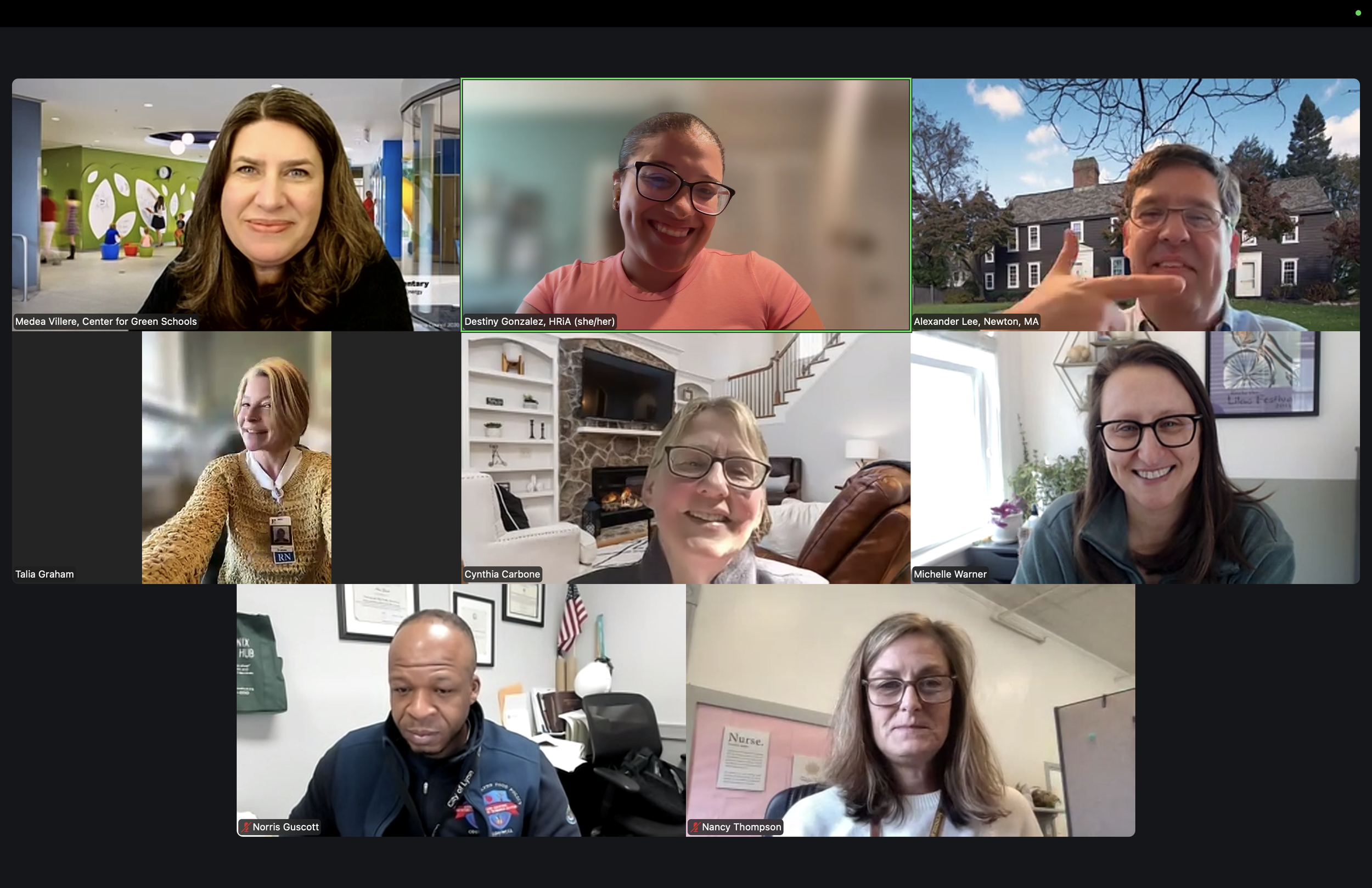
HEAL Districts Present at the MAAP Coalition Meeting!

On December 4th, 2024, the HEAL districts hosted a dynamic presentation at the MAAP Coalition Meeting, “From Policies to Practice: How Schools Are Adapting for Asthma-Friendly Learning.” This meeting brought together key stakeholders to share the innovative ways in which schools are implementing asthma-friendly policies and practices. The districts presented their strategies for improving environmental health conditions and highlighted the short-term actions and policies they are piloting to support students with asthma. 

To learn more about the projects and the valuable insights shared, you can watch the full recording of the meeting and access the presentation materials [here]. 

Additionally, the following key resources were shared during the session: 

For more specific guidance on extreme heat policies, the following resources were highlighted: 

watch the recording here


lynn handbook

Holyoke Public Schools' Extreme Heat Policy and Resources 

Haverhill public schools, emergency action plan

new bedford heal presentation